


What goes in a business plan?
The Following areas are potential section heads for a business plan. Not all sections are suitable for every business plan and some sections may need to be added for others
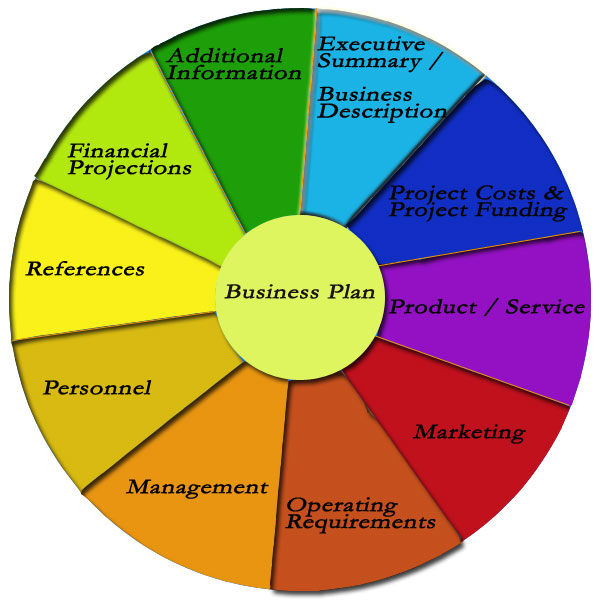 An excellent question, and one that many new and potential small business owners should ask, but oftentimes don't ask. The Business Plan also consists of the Market Plan and Financials. The body of the business plan can be divided into five distinct sections:
1) the description of the business,
2) the marketing plan, (The Market Plan)
3) the management plan,
4) the financial plan,
5) Addenda to the business plan should include the executive summary (read at the beginning of the document, but written last), supporting documents and financial projections.
It is The Synergy Group’s experience and belief that business plans assist the development of the overall structure of a company's Financial and Management needs. The day-to-day success of an enterprise and its ability to attract capital depends to a large degree on the completeness, clarity and precision of the business planning process.
Strategic business plans meet specific needs of a company in various stages of its life. The Synergy Group specialises in the creation of short term and long term Comprehensive Business Plans used for both management control and for presentations to the appropriate capital sources.
All new ventures (needing outside capital or not) must depend on a Well Documented and Frequently Updated Plan. The objectives are two fold.
Firstly to give prospective investors a realistic valuation of the feasibility and risks involved with a thorough analysis of capital needs and applications.
to provide the entrepreneurial team with a detailed operational guideline.
New Entrepreneurs and rapidly growing companies require not only adequate funding, but also strong operational and financial controls. A detailed plan decreases the risks associated with rapid growth by keeping the management team focused and financing sources up to speed.
Special project plans are used to
- assess the reality of undertaking new markets,
- developing new products or services and
- analysing feasibility of financial profitability related to capital acquisition.
Franchising, mergers, acquisitions and leveraged buy-outs require decisive action from a position of strength. Business plans must reflect the financial structure of the surviving company, as well as detailing the generation of increased cash flow to meet new debt requirements.
Turnaround companies must develop solid profitability. These plans describe management's strategic focus and how the plan will be implemented and properly executed to accomplish the turnaround. It requires detailed support of increasing revenues, expense cuts, and corporate asset management to secure the proper capital sources.